
Latest Trends in Commercial Kitchen Design for Restaurants & Hotels
The foodservice industry is evolving rapidly, and so are the kitchens behind it. From small cloud kitchens to large hotel restaurants, commercial kitchen design is now about more than just cooking—it’s about efficiency, sustainability, hygiene, and technology integration. If you are planning a new restaurant setup or upgrading your hotel kitchen design, here are the latest trends you should not miss.
1. Smart & Technology-Driven Kitchens
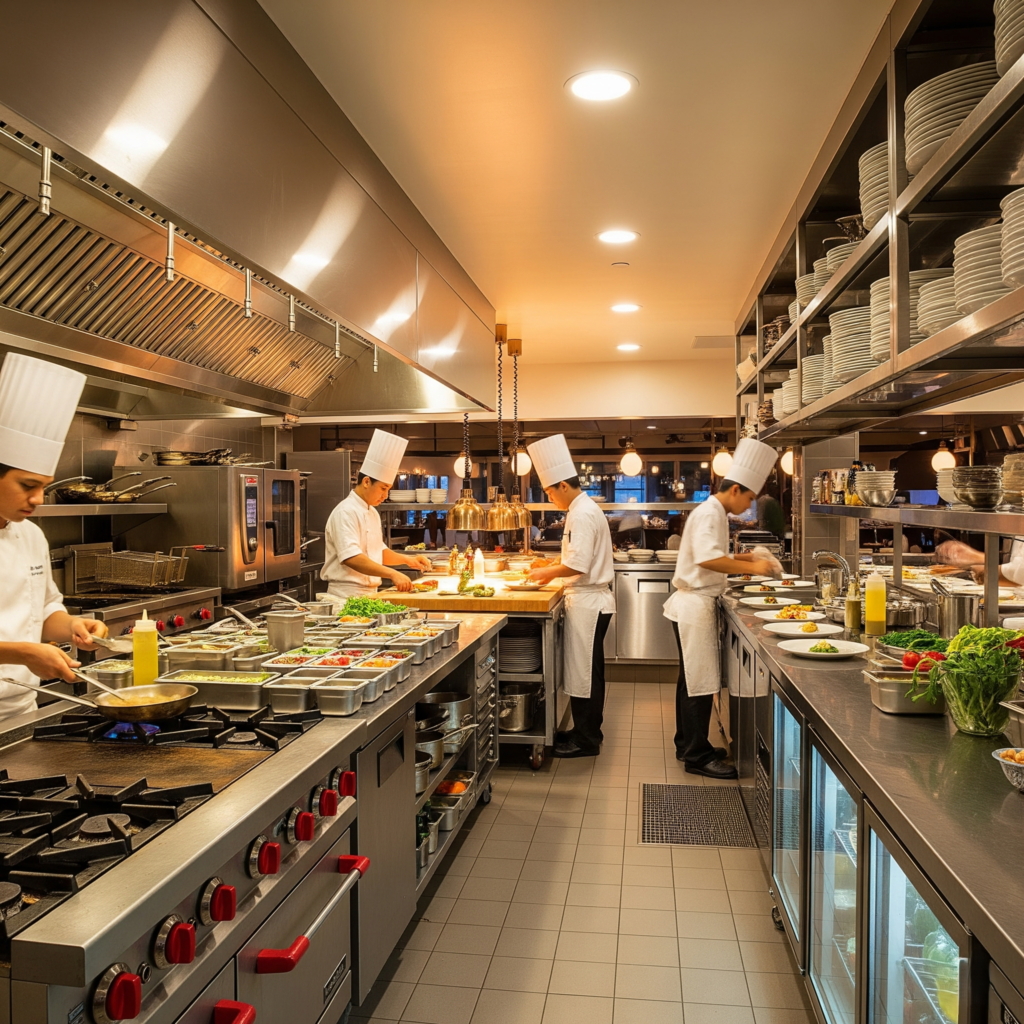
Modern commercial kitchen equipment is getting smarter. From IoT-enabled ovens that can be controlled remotely to automated cooking systems that ensure consistency, technology is making kitchens faster and more reliable. Restaurants and hotels are increasingly adopting AI-based inventory systems and digital order tracking to improve service speed.
2. Modular Kitchen Layouts
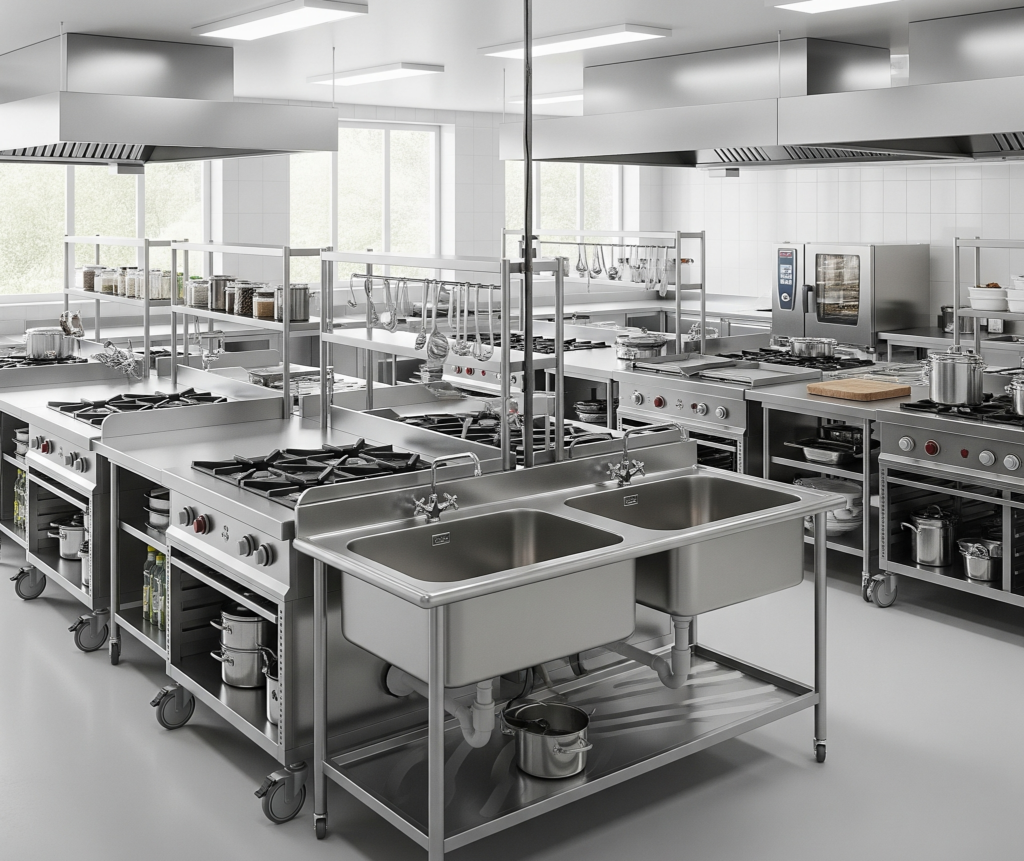
Flexibility is the new norm. A modular commercial kitchen design allows chefs to rearrange workstations and equipment based on menu changes or peak hours. This trend is especially popular in restaurant chains and hotel kitchens where multiple cuisines are prepared simultaneously.
3. Sustainability & Energy Efficiency
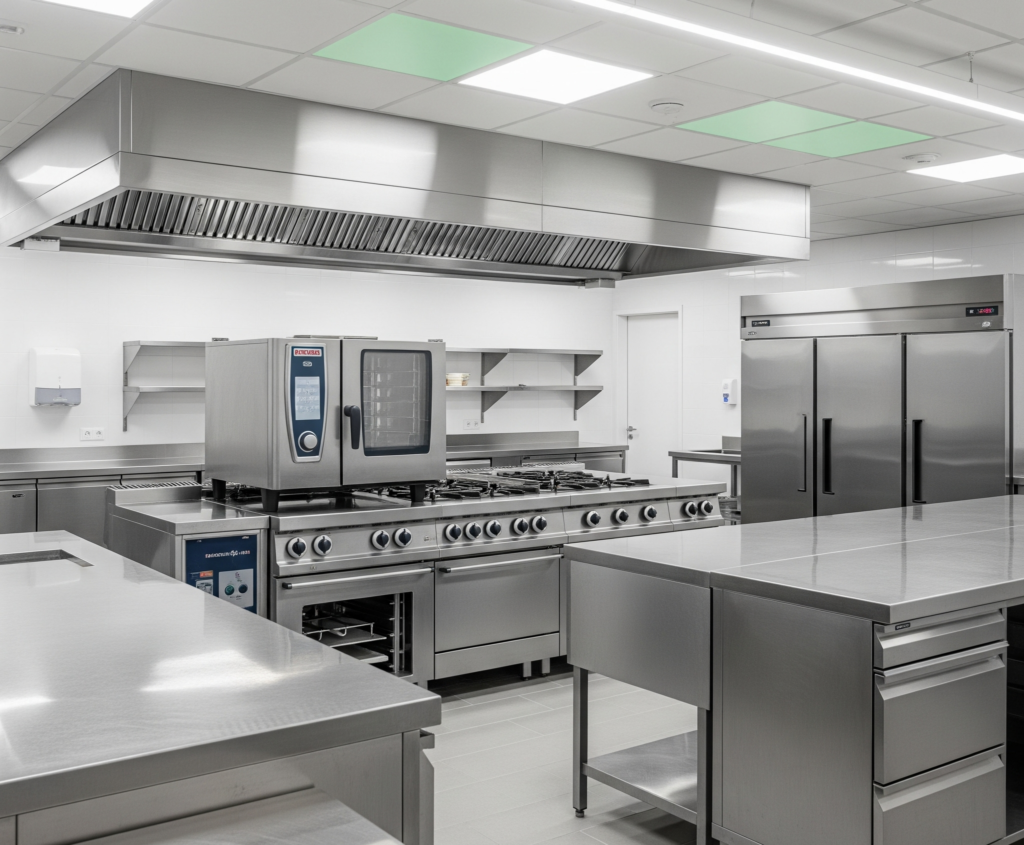
With rising energy costs, sustainability is no longer optional. Restaurants and hotels are now investing in energy-efficient kitchen equipment, water-saving dishwashers, and eco-friendly exhaust systems. Stainless steel equipment remains the most preferred choice because it is durable, recyclable, and easy to maintain.
4. Open Kitchen Concepts
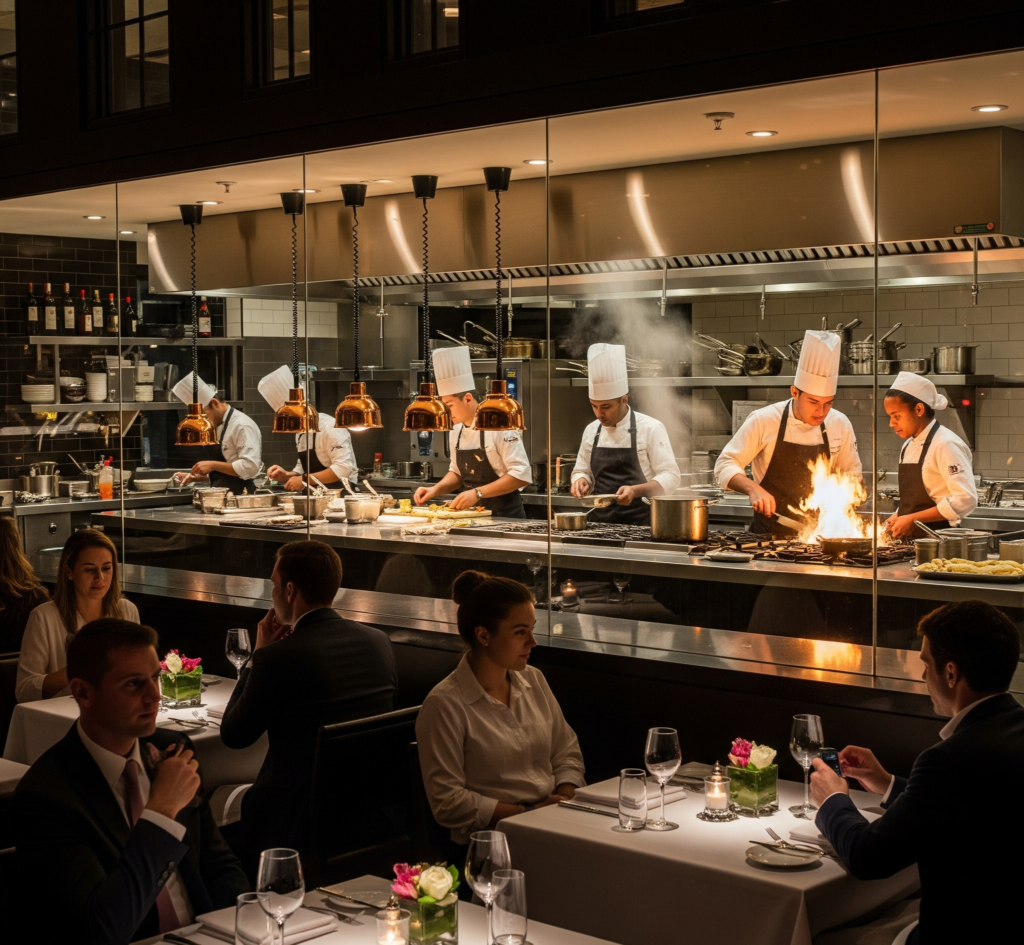
Guests love to see where their food is prepared. Hotels and fine-dining restaurants are adopting open kitchen designs to enhance transparency and dining experience. This trend not only builds trust but also encourages chefs to maintain higher standards of hygiene and presentation.
5. Focus on Hygiene & Safety
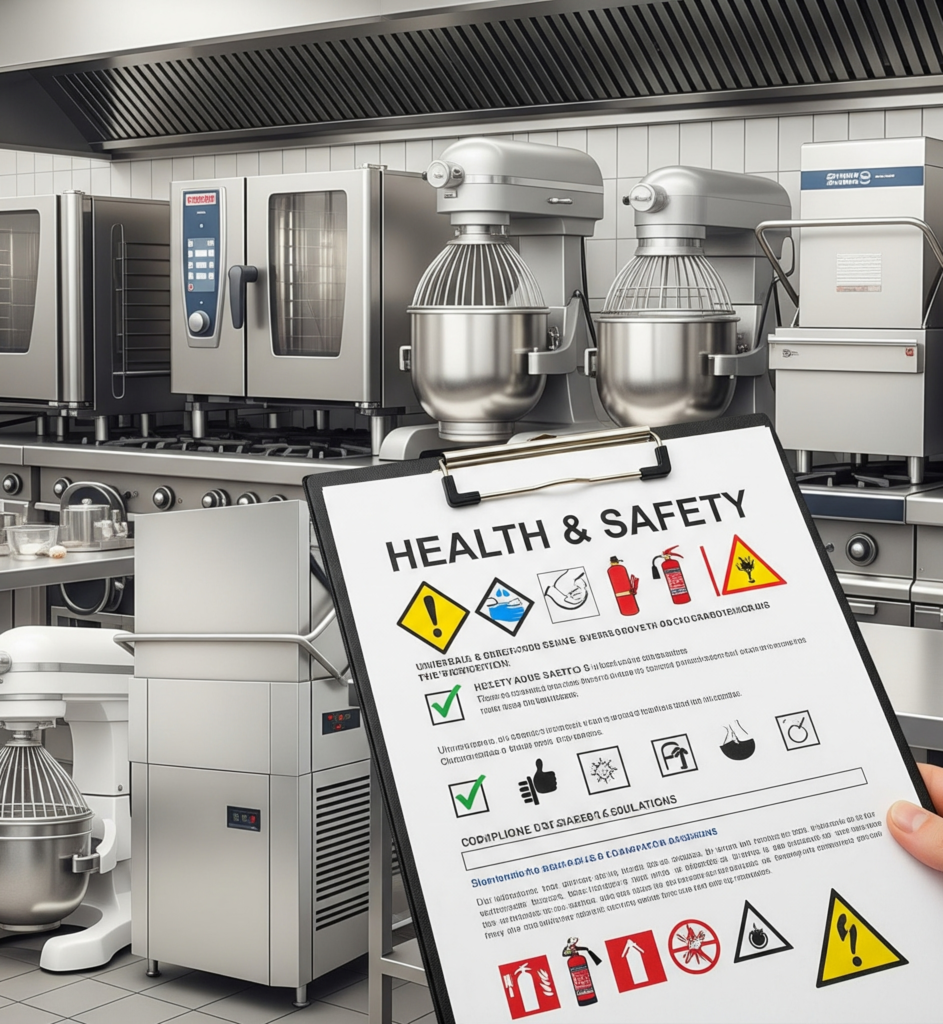
Post-pandemic, hygiene is a top priority in restaurant and hotel kitchens. Seamless stainless steel counters, touchless taps, and easy-to-clean modular designs are trending. Food safety compliance (HACCP standards) is shaping how commercial kitchens are designed and equipped.
6. Space Optimization for Cloud Kitchens
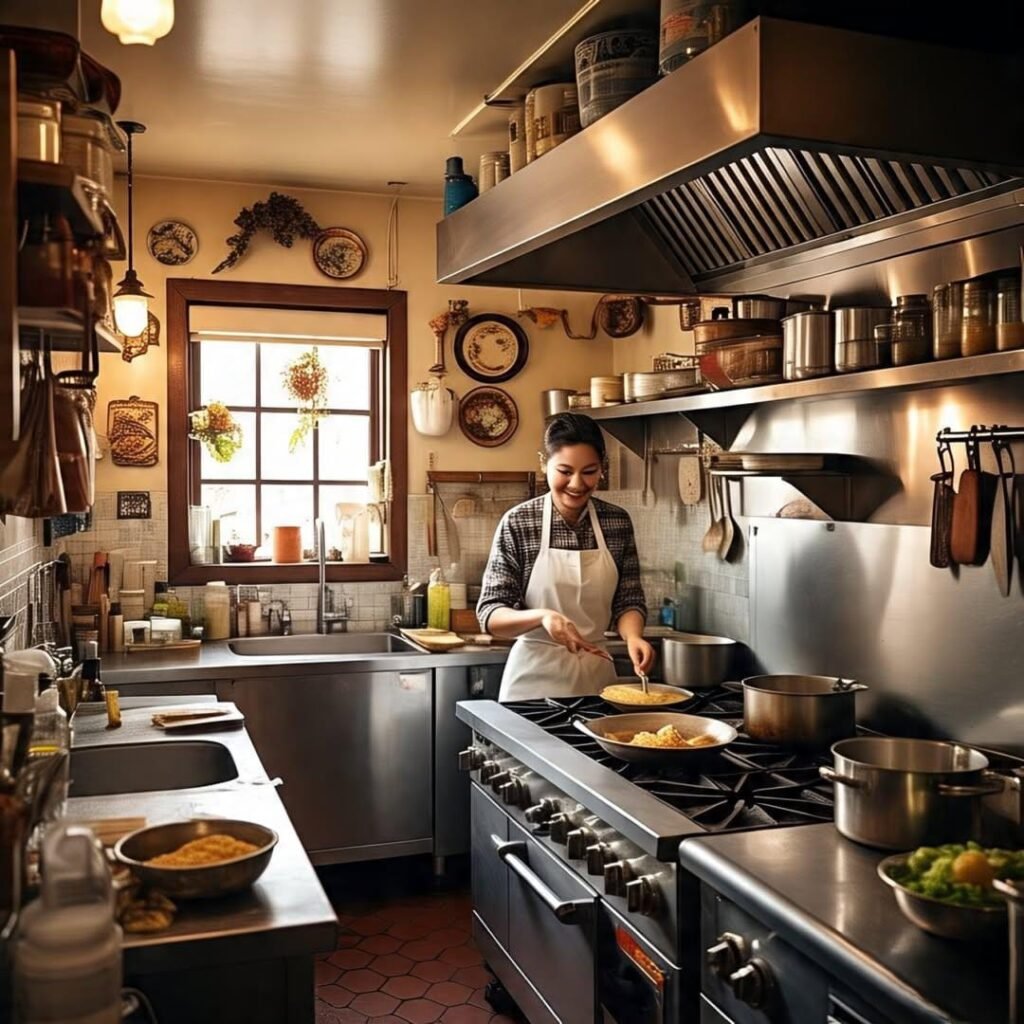
With the growth of delivery-only businesses, cloud kitchen design is becoming more compact and efficient. Equipment that combines multiple functions—like combi-ovens and multi-purpose fryers—helps save space while increasing productivity.
Conclusion
The future of commercial kitchen design lies in smart technology, sustainable solutions, and hygienic stainless steel layouts. Whether you are setting up a small restaurant kitchen or a large hotel kitchen, staying updated with these trends will help you build a space that is efficient, cost-effective, and future-ready.