
5 Refrigeration Mistakes Restaurants Make
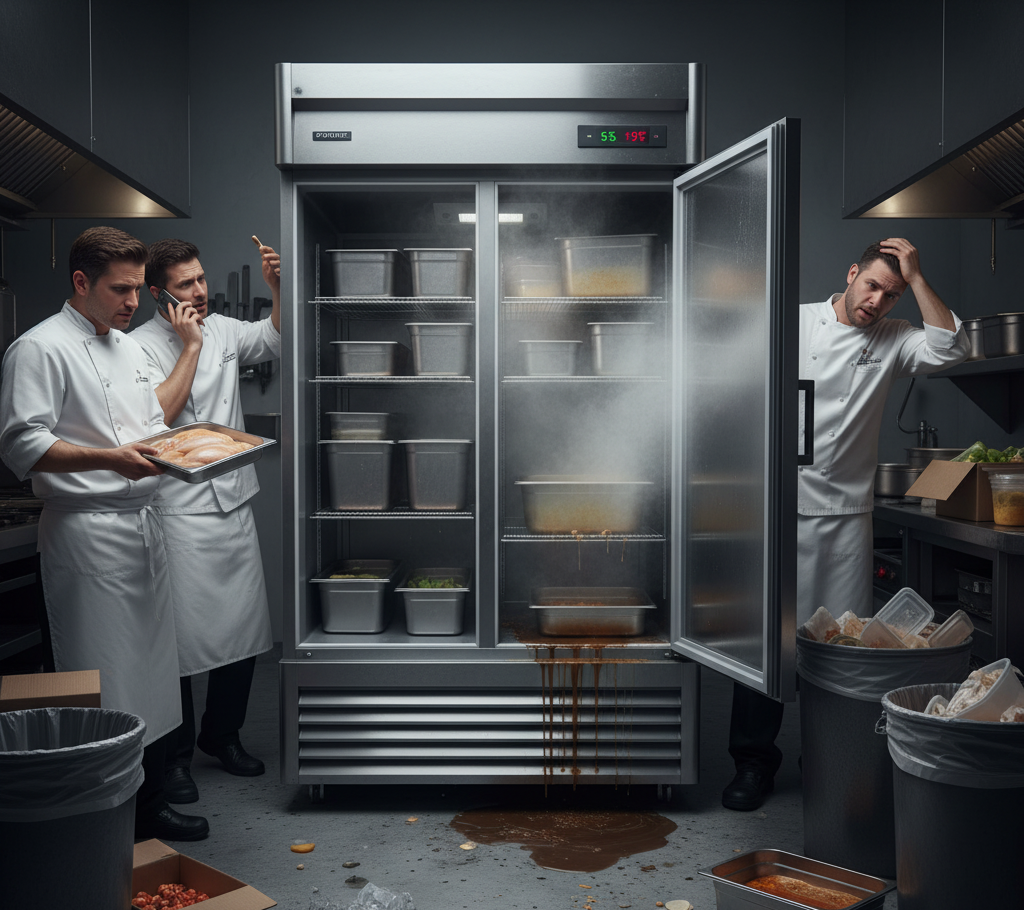
When it comes to running a successful restaurant, refrigeration plays a crucial role in maintaining food safety, quality, and operational efficiency. A single mistake can lead to food spoilage, health code violations, and wasted profits. That’s why understanding the refrigeration mistakes restaurants make is essential for every food business looking to maintain consistency, compliance, and customer satisfaction.
At Muskan Equipments Co., we help restaurants across India stay cool and compliant with reliable, energy-efficient commercial refrigeration solutions. Let’s look at the top five refrigeration mistakes restaurants make—and how to avoid them.
1. Neglecting Preventative Maintenance
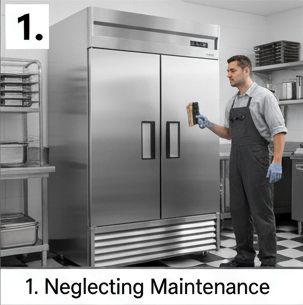
This is arguably the most common and costly mistake. When a restaurant is busy, routine cleaning of the refrigeration system often falls to the bottom of the priority list.
The Mistake:
Ignoring a regular maintenance schedule for both professional check-ups and daily/weekly staff tasks. Specifically, the condenser coils are often neglected.
Why It Matters:
The condenser coil is what releases heat from the refrigerator. When it gets covered in dust, grease, and dirt—common in a busy kitchen—the unit has to work harder and longer to cool down. This drastically increases energy consumption, drives up your utility bill, and puts massive strain on the compressor, leading to an eventual, expensive breakdown.
The Fix:
- Professional Service: Schedule a professional technician for preventative maintenance at least twice a year.
- Staff Cleaning: Train your staff to clean the condenser coils (usually located at the top or bottom of the unit) at least once a month. Daily cleaning of door gaskets and around the unit is also essential.
2. Overloading the Unit
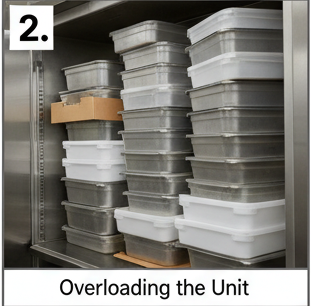
It’s tempting to pack that walk-in cooler or reach-in fridge to its absolute limit, especially before a busy weekend. But overstocking is a direct path to food-safety issues.
The Mistake:
Stuffing the refrigerator so tightly that cold air cannot circulate freely. Also, blocking the air vents and evaporator fans with boxes or ingredients.
Why It Matters:
Refrigerators cool by circulating cold air. If there is no space between items, the air flow is restricted, creating “hot spots” where food doesn’t chill to a safe temperature (typically 41∘F or 5∘C). This puts your expensive ingredients in the temperature Danger Zone, where bacteria multiply rapidly.
The Fix:
- Maintain Space: Ensure there are a few inches of space between items, and never stack food right up against the walls, ceiling, or on the floor.
- Clear Vents: Make sure all internal fans and air vents remain completely unobstructed to allow for proper circulation.
- Review Inventory: If you are consistently running out of space, it’s a sign you either need a larger unit or a more efficient inventory management system.
3.Placing Hot Food Directly Inside
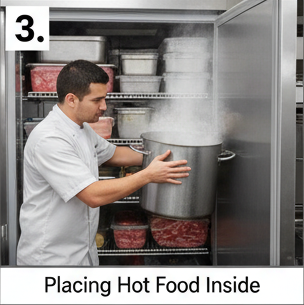
This mistake is common when kitchen staff are rushing to chill cooked items for later use (a process known as cooling).
The Mistake:
Putting large containers of hot-out-of-the-oven soup, stew, or stock directly into the refrigerator or freezer.
Why It Matters:
Introducing a large quantity of hot food causes a spike in the temperature of the entire unit. This forces the compressor to work overtime and puts other, already chilled food at risk by briefly warming them into the Danger Zone. Furthermore, placing hot food in a sealed container will slow its own cooling process, increasing the chance of bacterial growth.
The Fix:
- Rapid Cooling: Use approved rapid cooling methods before refrigeration. This includes separating food into shallow, smaller portions (no more than 2-3 inches deep), using ice baths, or utilizing a blast chiller.
- Proper Technique: Food must be cooled from 135∘F (57∘C) to 70∘F (21∘C) within two hours, and then from 70∘F (21∘C) to 41∘F (5∘C) or below within an additional four hours.
4. Relying Only on the Built-In Thermometer
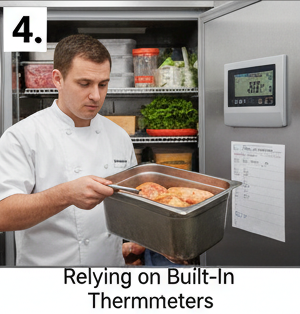
While your commercial unit has a digital display, this is often the temperature of the air near the thermometer sensor, not the temperature of the food itself.
The Mistake:
Only glancing at the unit’s external or internal display to verify temperatures.
Why It Matters:
Built-in thermometers can be inaccurate, uncalibrated, or simply not reflective of the temperature deep inside a full shelf of food. Health codes and food safety standards are based on the internal temperature of the food.
The Fix:
- Manual Checks: Use a separate, calibrated, reliable thermometer to check the temperature of your units multiple times a day—morning, peak hours, and closing.
- Temperature Logs: Keep a daily log. If you notice a pattern of fluctuating temperatures, it’s a clear warning sign of an impending equipment failure or an operational issue (like an open door).
5. Ignoring Worn-Out Door Seals
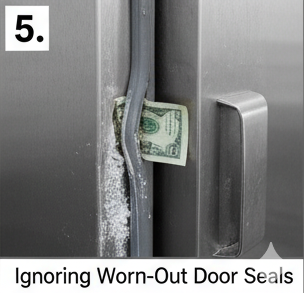
Door gaskets are the rubber seals around the perimeter of the door. They are designed to create a perfect, airtight seal to keep the cold in and the warm air out.
The Mistake:
Not routinely checking the door seals for cracks, tears, or brittleness, and delaying replacement when damage is found.
Why It Matters:
A damaged or weak door seal is like a hole in the bottom of a boat. It allows cold air to leak out, forcing your compressor to run almost constantly to maintain temperature. This leads to higher energy bills, frost buildup (especially near the leak), and a significantly shorter lifespan for your equipment.
The Fix:
- Routine Inspection: Train staff to quickly inspect all gaskets daily. A simple test: close the door on a dollar bill. If the bill slides out easily, the seal is likely compromised.
- Prompt Replacement: Replace damaged gaskets immediately. It’s a small, inexpensive fix that can save you hundreds on energy and prevent a major unit breakdown.
Final Thoughts
Refrigeration mistakes can cost restaurants dearly—both in food waste and reputation. By avoiding these five common errors and choosing the right equipment, you can ensure safe storage, smoother workflow, and better energy savings.
Muskan Equipments Co. provides premium commercial refrigerators built to withstand the toughest kitchen environments. From reach-ins to undercounter models, we’ve got the perfect cooling solution to keep your business running efficiently.